
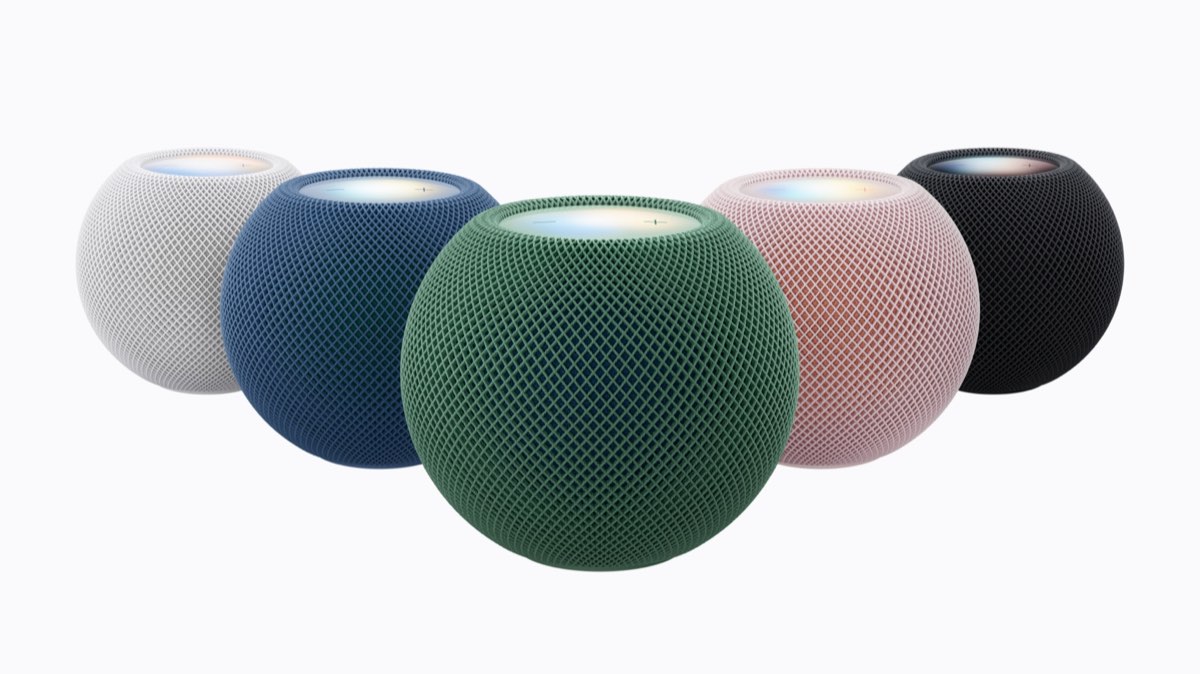
Stop the music and the top of the new HomePod mini goes still. That is the moment I keep coming back to, more than the five colours or the light that pulses with whatever is playing, because it is what the speaker will be doing for most of every day: sitting on a counter, waiting to be asked something. And on the day it reaches the shops, the thing that answers when you ask is the Siri you already have.
The facts first, briefly. Apple announced the HomePod mini 2 by press release on 13 October, the same day as the HomeView screen and the new Apple TV 4K. It runs Apple's S10 chip, the top lights up in colours taken from the album art, and it comes in five colours. It costs $149 in the US and reaches stores on Friday 30 October. The first HomePod mini launched at $99 in 2020 and stayed at $99 through every colour Apple added, the last of them midnight in 2024. So the new one costs half as much again as the old one did.
A strange fight to pick, and Apple is not picking it
Most of the coverage has framed this as Apple going after Amazon, and the numbers make that an odd fight to choose. The most recent figures I trust come from Consumer Intelligence Research Partners, which put Amazon at 69 percent of the US installed base of smart speakers in June 2021, Google at 25 and Apple at 5, as GeekWire reported at the time. That is five years old, and I would not treat it as today's number. I could not find a newer survey from anyone who publishes their method, and the sites that offer a 2026 figure disagree with each other by double digits. What every source agrees on is the order: Amazon first by a distance, Google second, Apple a long way behind.
Which sounds like a reason for Apple to swing hard, except the speaker does not swing at Amazon at all. A kitchen speaker is where the small requests go, the weather, a timer, the lights, the next song, and every one of them that goes to Alexa is one Apple does not get to answer. What Apple has and Amazon does not is the phone in the same person's pocket, the watch on their wrist and the laptop on their desk, and nearly everything good about the mini is something it does with those.
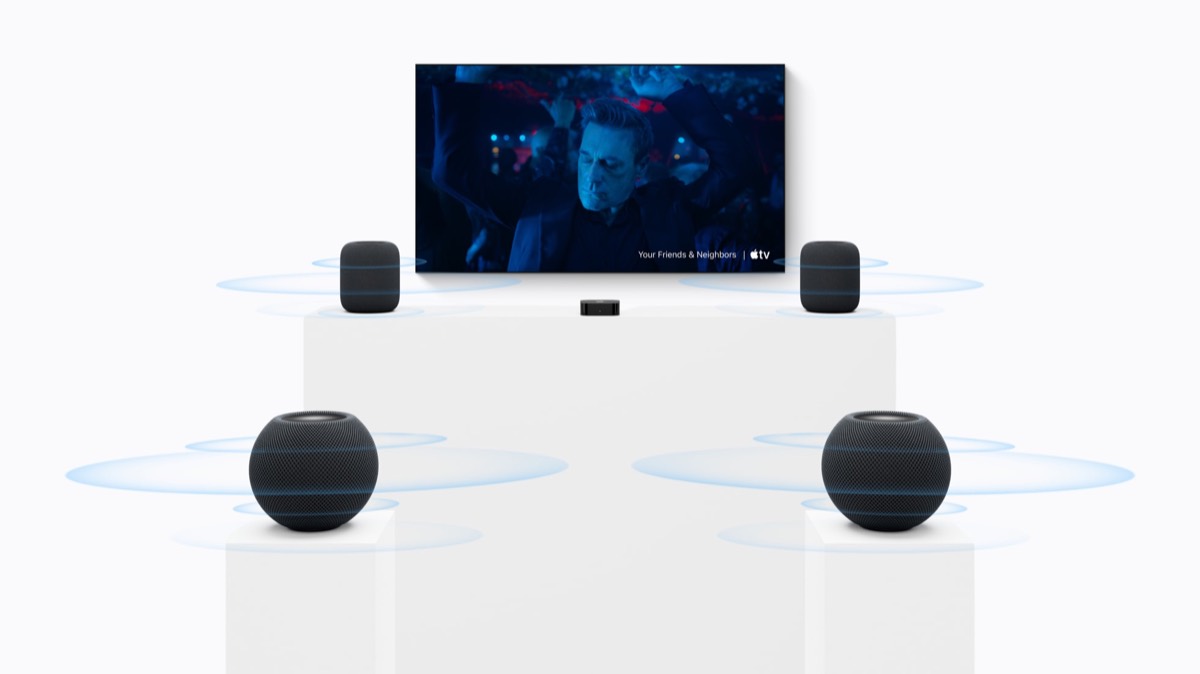
It is a home hub, so it runs your Home app accessories when you are out. Four of them, or a front pair of the larger HomePods with a pair of minis behind, give you surround sound with the new Apple TV 4K, which Apple says is a first. It can be the default speaker for a Mac with Wi-Fi 6E. Through the Home app you can check in through it and talk to whoever is in the house. And the new Apple Home Collection cameras, the ones built with LG, need a home hub for many of their features. The cheapest hub Apple now sells is this $149 speaker.
The main feature is not in the box
Apple's own release says Siri AI will reach the HomePod mini 2 in a later software update, free, and gives no date. On 30 October you get the current Siri in a new shell, which is a strange default for a product whose whole pitch is the new one. There is a version of this that would be fine: a speaker sold on its sound and its hub, with the smarter assistant arriving later as a gift. That is not how it is being sold, and so the risk quietly moves from Apple to you.
You pay now for the reason to buy it, and the reason arrives later.
If it arrives late, or arrives worse than the demo, you have already paid. And the best of it needs the right phone. The personal context, the part that knows your calendar and your messages, needs a paired iPhone or iPad that can run Apple Intelligence. Without one, Apple says you still get world knowledge, conversation and music discovery once it ships. Which is fine, except that the people shopping for a smart speaker on price are exactly the people the feature list leaves behind. None of it is coming to the European Union yet either, where Siri AI is not available on iPhone.
A very good upgrade for one particular counter
This is the part that answers the Amazon question. Every feature that makes the mini better than an Echo assumes you already own the other Apple things. That makes it a lovely upgrade for an iPhone household with an Echo Dot on the kitchen counter, and I suspect that household is the real target. It gives almost nothing to somebody who bought an Echo because it was the cheap one and it works, and a price that went up by $50 gives them even less reason to look. Apple can win back its own customers' kitchens. It is much harder to see it winning anyone else's.
If the surround sound is what tempts you, count the boxes first. Apple's set-up needs the new Apple TV 4K and either four minis or two of the larger HomePods at the front with two minis behind. The $149 in the picture is one of four speakers.
I expected to spend this whole piece on the price. Fifty dollars is real money, but a speaker that sounds better and runs a house is allowed to cost more than one that did less in 2020, and I spent too long on it. The object is clearly made with care. What bothers me is that the care stops at the moment you speak to it, and the moment you speak to it is the product. If you already live in Apple's house and want a better kitchen speaker, wait until the update ships and someone you trust has lived with it for a few weeks. If you have an Echo that works, nothing Apple announced on 13 October is a reason to take it off the counter.
- The HomePod mini 2 costs $149, up from the $99 the first mini held from 2020 to 2024, and reaches US stores on 30 October.
- Siri AI, the feature it is sold on, comes in a later free update with no date. On the first day it runs the Siri you already have.
- The personal side of Siri AI needs an iPhone or iPad that can run Apple Intelligence, and none of it is coming to the European Union yet.
- What it does better than an Echo assumes other Apple devices: a hub for Apple Home, surround sound with the Apple TV 4K, a speaker for the Mac.
- It can win back iPhone households from the Echo on their counter. It gives almost everyone else little reason to switch.
- If you want one, wait until Siri AI ships and has been used for a few weeks.
How this was put together: the specifications, price, dates and requirements are from Apple's HomePod mini 2 release and its Apple Home Collection release, both of 13 October 2026, and its earlier HomePod mini releases for the $99 price. The market share figures are CIRP's from June 2021, the newest we found from a firm that publishes its method. We have not used the HomePod mini 2. Images: Apple.